
The text can be found in PDF for at the bottom.
Scrambling the hierarchy of the senses:
the horizon and potential of sensory ethnography
“Film viewing involves the conjunction of two acts of looking and two bodies, at the very least. […] The human beings in the film create another residue that is not so different from the filmmaker’s own, for both are imprinted in the film’s images as equivalent facts.”
– David MacDougall, The Corporeal Image
The cinematic experience is mostly understood as a visual and auditory stimuli, but what about the other senses? Especially in the realm of the academia, the predominant mode of understating and arguing has been verbal or textual, demonstrated mostly through text and speech. This epistemological persistence to these particular means of interpretation is linked to a western / patriarchal tradition which dismisses the entanglement of the senses, through their virtual isolation in order to discover a greater “Truth” hiding behind the intimate reality. But how can our senses exist in a vacuum? Don’t we listen with our vision, see through our smell, experience pain via our thoughts? Questioning the sovereignty of the audiovisual, a sensorial approach invites us to interact with our environment through our senses as they emerge holistically, without prioritizing.
A resonant participator in this argument has been the Sensory Ethnography Lab and especially the film Leviathan (2012), set in and around a fishing boat, off the coast of NewBedford, Massachusetts. Without a clear protagonist, a plethora of points of view is created through the placement of action cameras on humans and on objects in and out of the ship, portraiting an experience simultaneously human and beyond human. Through an incorporation of hidden cuts, extreme close-ups, and an atmospheric sound design, where voice is almost absent, a trance like cinematic interaction is created. Context and narration are dissolved through an overabundance of sensorial stimuli, immersing the audience in a deep individual state of experiencing.

But as Faye Ginsburg (2018) stresses, this approach neglects any sense of accountability towards both the audience and film participants, thus avoiding the participation in the on going struggle of reconsideration of the ethics and power dynamics in the film-making / research process. Lacking an act of reflexivity crucial, especially to sensorial research. (Cox, Rupert, Andrew Irving and Christopher Wright, 2016)
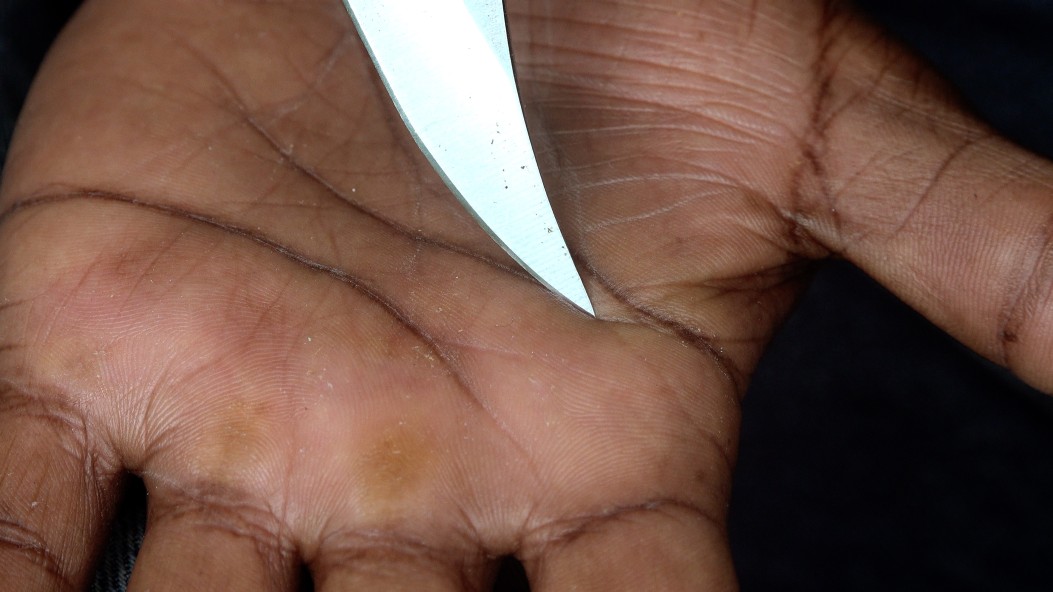
Mittijs van de Port’s film “The body won’t close”(2020), is an attempt to bridge this reflexive gab. Set at Santo Amaro, Bahia (Brazil) the film investigates the local practice of “closing one’s body” in order to be invincible. The story is told through the omnipresence of Mittijs, signified through voice-over and the constant interaction with his encounters. But the journey is not merely a personal one. The use of the body as a plane of narration, creates a dreamlike state of “Sensory Embodied Reflexivity” (Dara Culhane, 2016), achieved via the use of visual / sound effects, metaphorical use of imagery as well as the poetic / cynical thoughts of Mattijs and his interlocutors; thus creating a link of participatory sensing between him, his encounters and the audience.
The juxtaposition of these particular approaches, help us imagine the dilatative potential of sensorial film-making and research. The landmark legacy set by the Sensory Ethnography Lab, demonstrates the possibility of socialization of academic research1 through the establishment of creative intimacy with the audience. But as new means of interpretation arise so does the need for inventing new means of critical reflexivity, in order to “to decolonize the screen in diverse, inventive, and unexpected ways” (Faye Ginsburg, 2018).
- The film was critically aclaimed in a plethora of particulary non-ethnographic film festivals, as well as art institutions.
References
Films
- Castaing-Taylor, L., & Paravel, V. (2012). Leviathan [Film]. Sensory Ethnography Lab.
- Port, M. (2020). The Body Won’t Close [Video file]. Royal Anthropological Institute
Literature
- Cox, Rupert, Andrew Irving and Christopher Wright (2016) The sense of the senses. In: Beyond Text? Critical Practices and Sensory Anthropology. University of Manchester
- Culhane, Dara (2016) Sensing. In: A different kind of ethnography: Imaginative Practice and creative methodologies by Denielle Elliott and Dara Culhane (eds). University of Toronto Press.
- Ginsburg, F. (2018). DECOLONIZING DOCUMENTARY ON-SCREEN AND OFF: SENSORY ETHNOGRAPHY AND THE AESTHETICS OF ACCOUNTABILITY. Film Quarterly
- MacDougall, David (2006) The Body in Cinema. In: The Corporeal Image. Film, Ethnography and the Senses. Princeton Univerity Press
External Links
- Sensory Ethnography Lab’s Website – https://sel.fas.harvard.edu/